
Federal Advocacy
COSSBA’s nonpartisan Federal Advocacy Platform concentrates on major federal issues with widespread impact on the nation’s public schools and students. Our advocacy tenets are adopted annually by leaders of the member state school boards associations, requiring a two-thirds majority support. They serve as a unifying agenda on behalf of public school students.
COSSBA partners with Bose Public Affairs Group to track and advocate for federal education issues and policies impacting local school boards and public education.
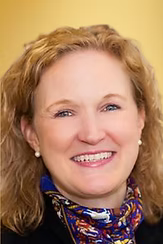
Della Cronin
Federal Advocacy
Principal
BOSE Public Affairs Group
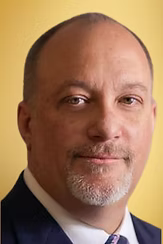
Robert Moran
Federal Advocacy
Principal
BOSE Public Affairs Group

Jared Soloman
Federal Advocacy
Senior Policy Advisor
BOSE Public Affairs Group
Our Advocacy Platform
COSSBA Connection - February 2026

Together We Make It Possible: 2026 COSSBA National Conference
Without you, all of this would be impossible. To the 27 state school boards associations and to your dedicated board members, executives, and staff, thank you for elevating the 2026 COSSBA National Conference to one of the best in the country. Your leadership and collaboration shaped this conference through your willingness to serve as presenters, volunteers, advisors, and engaged participants. The COSSBA National Conference thrives because of the collective wisdom and dedication you bring to public education. Your contributions strengthened not only the event itself but also the nationwide community of school board members working to support public schools – our students, educators, and communities. We are grateful for the time, passion, and partnership each of you invested in making this year’s conference meaningful and memorable. We look forward to seeing you in Louisville!
We have added several new things this year so be sure to check them out:
- COSSBA Bookstore with a variety of books, including staff favorites. We are asking attendees to bring their favorite books with them or purchase one at the bookstore to donate to the COSSBA book drive. These books will be donated to a local Louisville nonprofit.
- While you are in the Exhibitor Showcase, stop by our video area and take a few minutes to share the successes, innovations and stories that make your schools special. Whether it is a student achievement, a creative program, a dedicated educator or a community partnership, this is your opportunity to tell the story of public education the way it should be told. We will compile these videos and share them with elected officials and the public through our social media platforms, helping amplify the strong work happening in districts like yours.
- Elevate: Women Leading the Future of Education, a new breakout session bringing together women leaders for an engaging, interactive session. Attendees will leave with a personalized leadership intention and practical tools to strengthen their presence, decision-making, and impact at the board table and beyond. There is no additional fee to attend, but registration is required. To register, click here .
And, if you would like to volunteer for a couple of hours while you are at the conference – directing attendees to events, answering questions at registration or just lending a hand, please email alize.doherty@cossba.org.
For the full agenda, please go to our website .
COSSBA Preconference Day to Deliver High-Impact Breakout Sessions

COSSBA will kick off its 2026 National Conference with an engaging Preconference Day on March 12, hosted by the Unified Boards Alliance (UBA). Centered on the theme “From Vision to Impact: Innovative Strategies for Reaching High Student Achievement,” the day will feature dynamic keynote speakers and focused breakout sessions designed to equip school board members and district leaders with practical, results-driven strategies.
Participants can expect interactive sessions on:
- Innovative Leadership for Student Success
- Strategic Governance and Accountability
- Turning Vision into Measurable Results
- Elevating Student Voice in Board Leadership
The UBA Preconference Day sets the tone for a powerful and purposeful conference experience, focused on strong leadership, unified governance, and advancing student achievement nationwide.
By bringing together visionary leadership, practical strategies, and collaborative dialogue, COSSBA and UBA are reinforcing a shared commitment to excellence in governance and improved outcomes for every student.
Participants will leave energized, equipped, and ready to lead with clarity and purpose, ensuring that the work of boards across the nation continues to move from vision to measurable impact in classrooms and communities.
For the UBA Preconference Day, click here .
Student Voice Is Not Optional in Effective School Board Governance
By Dr. Kathy McFarland, Executive Director

Public education exists for one reason: students.
Voices most directly affected by governance decisions are often the least represented in the conversation. If school boards are serious about effective governance, improved outcomes, and community trust, student voice cannot be an afterthought. It must be embedded in the work.
Governance is about the future. Boards adopt policies, set the vision, oversee budgets, and monitor performance with long-term student success in mind. But the “future” we discuss in strategic plans is not abstract. Students are sitting in classrooms right now.
Student voice grounds governance in reality.
This is not about symbolism. It is about strategy.
When boards create structured opportunities for student input, conversations shift. Data is contextualized. Policy discussions become more focused.
High-functioning boards across the country are moving beyond ceremonial student reports.
Importantly, student voice does not blur governance roles. Boards remain responsible for setting direction and ensuring accountability.
Why does this matter now?
Today’s students navigate extraordinary complexity.
Quantitative metrics tell us what is happening. Students help us understand why.
Listening to students strengthens governance.
When students see their perspectives sought, considered, and valued, they experience civic engagement firsthand.
That lesson may be among the most powerful outcomes public education can offer.
Student voice must be intentional to be meaningful.
Without clarity and follow-through, student voice becomes performative. With structure and accountability, it becomes transformative.
Student voice keeps boards focused on what matters most.
It is a governance imperative.
If we govern for students, we must also be willing to govern alongside them.
And that begins by listening.
COSSBA’s Continued Advocacy for Public Education
By Dr. Kathy McFarland, Executive Director

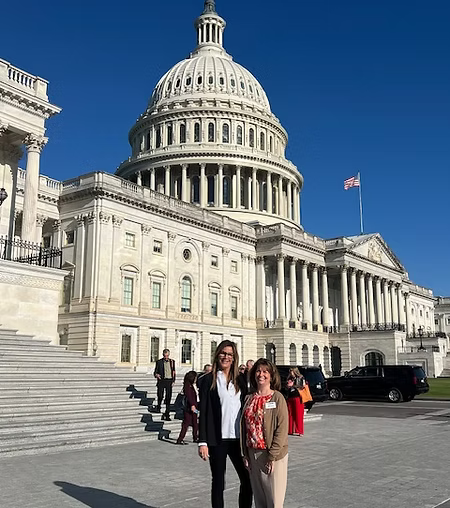
On December 8–10, 2025, Julie Feasel and I braved the frigid temperatures and high winds in Washington for two days of meetings with bipartisan leadership offices.
Our meetings began in the Russell Senate Office Building…
After a quick planning lunch, we headed to the Hart Senate Office Building…
Bright and early on our second day, we met with Mark Laisch…
Education Funding
Across both Republican and Democratic offices, there was broad agreement that sustained investment in education is essential.
Flexibility for Federal Tax Credits
We also focused on the pending regulations for the new scholarship tax credit included in H.R. 1.
H‑1B Visas and Talent Retention
Finally, we discussed the potential impact of the new $100,000 fee on H‑1B visas.
Partnership Matters
During every meeting, I emphasized that COSSBA is here to help and serve as a resource.
The Mass Shooting Playbook
Introduction by Bruce Hennes, Hennes Communications

A mass shooting is not just a tactical emergency. It is a communications crucible.
Supporting Multilingual Learners in Middle and High School ELA
Provided by McGraw Hill

Multilingual learners (MLLs) are a growing population in U.S. schools.
Our latest blog post explores how districts can shift to an asset-based approach.
BE ENGAGED
School Board Members: Contact your state school boards association for insights on building strong relationships with your members of Congress.
Find Your Member of CongressEducation Committees of the U.S. Congress
Committee on Education and The Workforce
HOUSE
2176 Rayburn House Office Building
Washington, DC 20515-6100
(202) 225-4527
Health, Education, Labor, and Pensions
SENATE
428 Senate Dirksen Office Building
Washington, DC 20510
(202) 224-5375
FOR MORE INFORMATION CONTACT:
Julie Feasel, Director of Communications & Government Relations
julie.feasel@cossba.org
Leave a commentOrder by
Newest on top Oldest on top